
Choosing a Wedding Location in Brazil
Choosing among Brazil wedding locations involves more than finding a beautiful setting. The same destination may be manageable for a mostly local guest list and demanding for a wedding that includes domestic travelers, older relatives, children, guests with mobility needs, or people arriving from outside Brazil.
Start with the people who must reach the celebration. Compare the serving airport, onward journey, accommodation, seasonal conditions, venue operations, and destination experience as one planning picture. Scenery and attractions shape the atmosphere, but they do not describe the full travel burden.
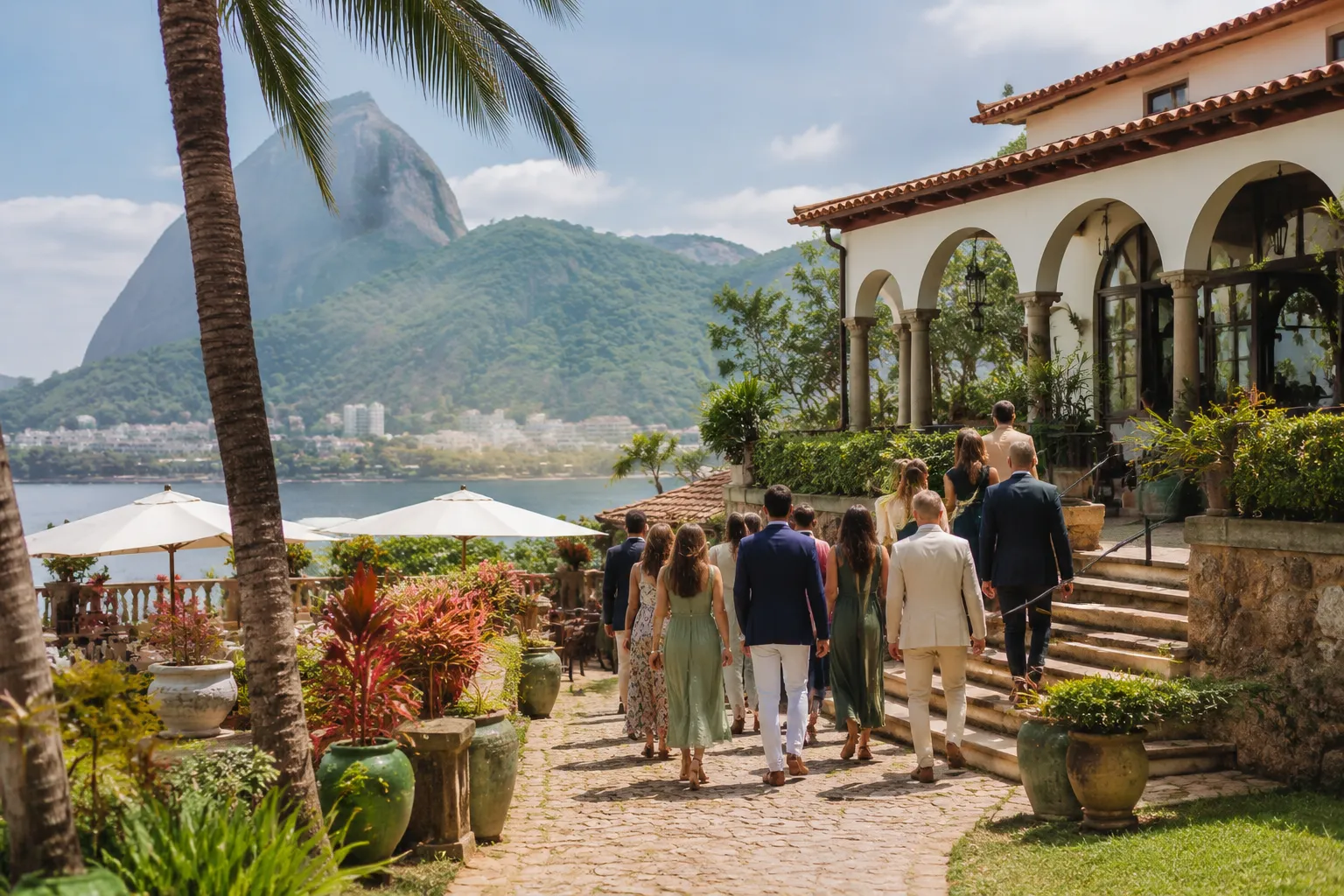
The available research supports this comparison framework, but it does not provide a current ranking of named Brazilian destinations. Routes, transfer times, prices, road conditions, accommodation, accessibility, and venue arrangements can change. Confirm date-specific details with the relevant airport, airline, transfer provider, accommodation, venue, and local destination services.
Start With the Guest List, Not the Scenery
Before comparing locations, describe the group that will travel. Guests who already live near the venue may place more weight on venue style, ceremony setting, accommodation, and local character. A wedding that brings together guests from several Brazilian states or from abroad usually adds connections, baggage handling, overnight stays, and coordination between arrival times.
Ask:
- Where will most guests begin their journey?
- How many guests will fly, drive, or combine both?
- Will international guests need a domestic connection after entering Brazil?
- Are there older guests, young children, guests with mobility needs, or people traveling with substantial luggage?
- Will guests stay together, in several hotels, or in private accommodation?
- Does the wedding require one shared transfer or several arrival windows?
- Will guests need to travel again between the ceremony, reception, and accommodation?
This is the difference between looking at a destination name and assessing guest access to a Brazil wedding location. A city, beach, mountain area, or historic town describes the setting; it does not, by itself, describe the journey.
In Brazilian-diaspora weddings, the couple may be balancing family meaning with a route that guests can manage. Traditions and travel arrangements may be adapted to the group. Family expectations should be discussed separately from the venue’s operating limits.
Compare the Full Journey to the Venue
Airport access is only the first part of the trip. The practical journey may include:
- Travel from the guest’s home to an airport or long-distance departure point.
- Arrival at the Brazilian airport serving the destination.
- Baggage collection and time inside or around the airport.
- Transfer by car, shuttle, bus, boat, or another local mode.
- Arrival at the accommodation.
- Final movement to the ceremony and reception venue.
A destination with a nearby airport may still involve a complicated final leg. Another location may require a longer initial journey but offer more accommodation or transport options after arrival. Record the complete route rather than focusing on air distance alone.
Studies of airport access commonly consider surface travel time, access cost, and service reliability. Passenger needs also vary with baggage, group size, travel experience, available information, and the purpose of the trip. Weddings add fixed ceremony times and the need for several people to arrive within a coordinated window.
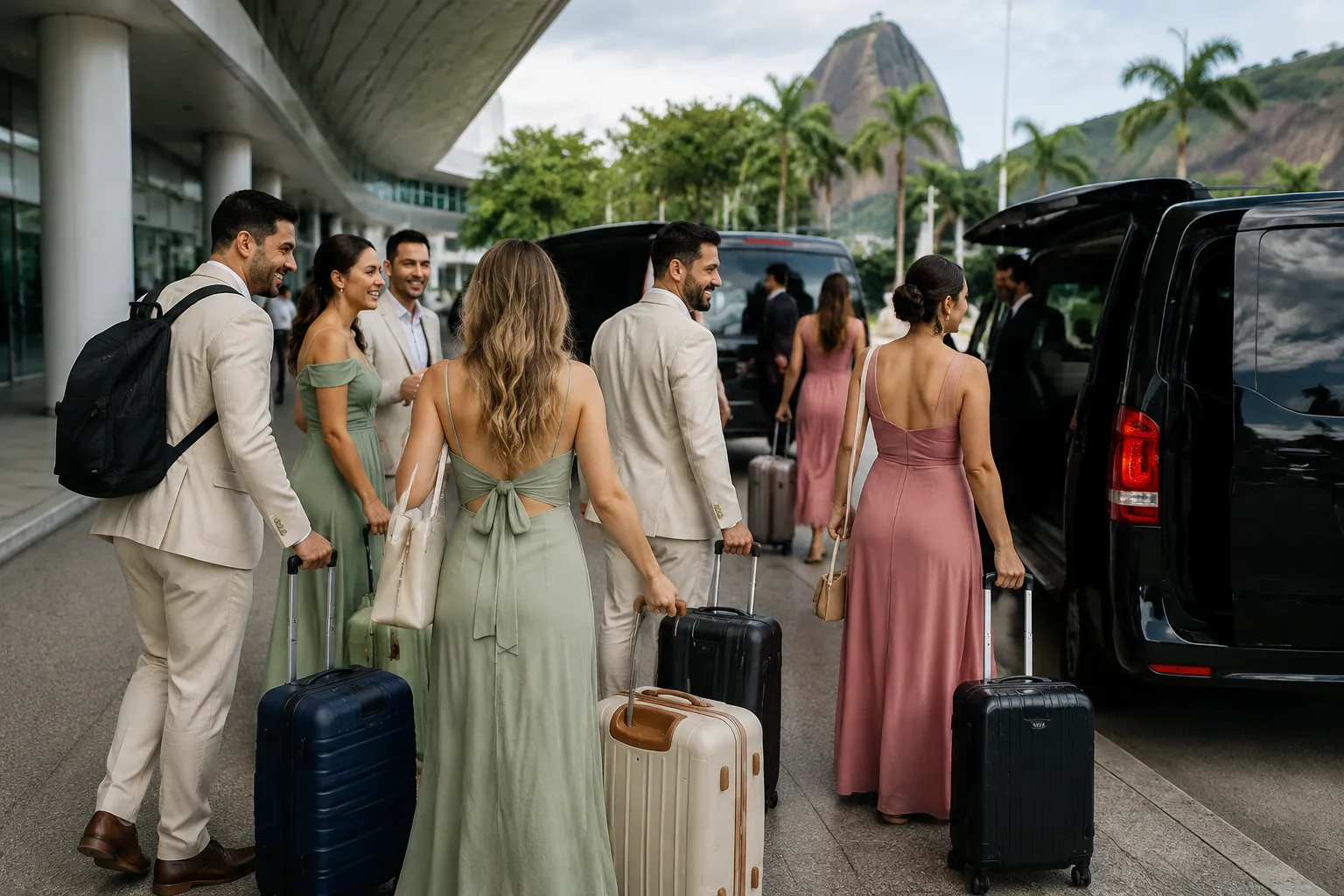
Ask the venue or local provider:
- Which airport do guests normally use?
- Are there other airports that look close on a map but are impractical alternatives?
- What onward transport arrangements are available on the wedding date?
- Can one provider move the group, or will several vehicles be needed?
- How are late arrivals, missed connections, or delayed baggage handled?
- Would arriving the night before help the planned guest group?
- Could weather or road conditions affect any part of the route?
- Can guests receive clear instructions in the languages they need?
General tourism or aviation information can identify questions to verify. It cannot establish a current route, fare, transfer time, or accessible service for a particular wedding. Those details belong with the current providers.
Separate the Serving Airport From the Destination
“Airport access for Brazil weddings” can refer to several different questions:
- Is there an airport in the destination municipality?
- Which airport handles the flights most guests are likely to use?
- How often are suitable flights available on the relevant dates?
- How far is the airport from the accommodation?
- How many road or water transfers follow arrival?
- What happens if guests arrive at different times?
These questions matter when a destination is marketed through a larger, better-known city or region. A location may be described as near an airport while still requiring a substantial onward journey. Historical material from remote Brazilian settings illustrates the general tradeoff between a distinctive atmosphere and a heavier transfer burden, but it is not current evidence for a particular wedding location.
The airport is also part of the guest experience. Baggage, signage, terminal distances, vehicle collection, and information may affect how manageable the next leg feels. A passenger survey concerning Rio de Janeiro’s airport included observations about distances between areas, road access, baggage, information, comfort, and perceived prices. Those findings describe that study’s participants and setting; they are not site testing and should not be generalized to every Brazilian airport.
Write down the airport and the final transfer separately. This makes hidden travel work visible.
Assess Accommodation Near the Wedding Location
Accommodation can change the practical meaning of a destination. A venue may have its own rooms, rely on nearby inns, or require guests to stay across several properties. Each arrangement creates different coordination questions.
- How many rooms are available close to the venue?
- Are there accommodation types for different budgets and needs?
- Can guests stay near one another?
- Is transport needed between hotels and the venue?
- Can the accommodation handle early arrivals and late departures?
- Are meals, luggage storage, and local transport available when guests need them?
- Will rooms need to be reserved before invitations are sent?
- Do private rentals involve different transport or check-in arrangements?
Destination-wedding research commonly places accommodation, transportation, local suppliers, climate, infrastructure, and guest access within the same planning picture. Limited accommodation may increase transfer needs, while dispersed lodging may make a shared wedding shuttle harder to organize.
Do not assume that a destination with tourist attractions has the accommodation pattern a wedding group needs. Check the inventory near the venue and the practical distance between each lodging option and the event.
Consider Infrastructure as Part of the Wedding Plan
Local infrastructure affects more than sightseeing. It may influence guest arrivals, supplier deliveries, ceremony timing, food service, music, photography, and movement between wedding spaces.
Ask the venue:
- Which access roads do guests and suppliers use?
- Where can vehicles drop off and collect guests?
- Is there space for coaches, vans, or several cars?
- How are deliveries coordinated?
- What changes if rain, heat, wind, or another seasonal condition affects the plan?
- Are the ceremony and reception areas close enough for the guest group?
- What arrangements exist for guests who cannot manage long walks or uneven surfaces?
- Which local suppliers are available, and which services must come from another city?
- How much time is needed to move people and equipment between locations?
A regional study of the Piauí coast considered access routes, accommodation, food services, attractions, cost, availability, and infrastructure together. Its observations about access difficulties apply to that region and not to Brazilian wedding locations generally. The useful planning principle is narrower: examine visual appeal alongside the systems that allow guests and suppliers to reach the event.
Use “accessible” carefully. A broad destination description does not establish that a venue works for guests with particular mobility needs. Ask the venue to describe routes, surfaces, restrooms, rooms, transport arrangements, and contingency procedures in concrete terms.
Account for Seasonal Conditions
Seasonal conditions may affect travel, accommodation demand, outdoor ceremonies, road access, and transfer timing. The relevant question is not simply whether a destination has a wet or dry period, but how those conditions interact with the wedding plan.
- Which weather patterns are common around the proposed date?
- Could rain or heat affect the road between the airport and the venue?
- Does the venue have an indoor or covered alternative?
- Do arrival and departure transfers have enough flexibility?
- Could seasonal events or holidays affect accommodation availability?
- Are local suppliers available during the selected period?
- Will guests need to pack for conditions different from those at home?
Case-specific research on remote Brazilian tourism settings shows how roads and final routes can change with seasonal conditions. Materials concerning the Amazon and Jalapão are reminders to ask about route conditions, not general wedding-travel evidence for Brazil.
The venue should describe its own contingency arrangements. Tourism information may provide broad regional context, while date-specific operational answers belong with the venue and transport providers.
Balance Destination Experience With Travel Burden
Destination-wedding research often discusses scenery, photography opportunities, cultural context, attractions, travel patterns, and the destination experience as reasons couples consider a location. These are legitimate parts of the decision when placed beside the effort required from guests.
A couple may value:
- A beach, mountain, historic, urban, or countryside setting
- Opportunities for wedding photography
- Local food and regional character
- Activities guests can enjoy before or after the celebration
- A location connected to family history
- A private setting for a smaller gathering
- The possibility of turning the wedding into a shared trip
For each attractive feature, add an operational question:
- How will guests reach it?
- How long will they need to stay?
- What can guests do if they do not join optional activities?
- Can the venue support the planned ceremony style and reception flow?
- Will the setting accommodate expectations around padrinhos, madrinhas, music, food, dancing, and photographs?
- Which decisions belong to the couple, and which depend on the venue, church office, civil registry, or suppliers?
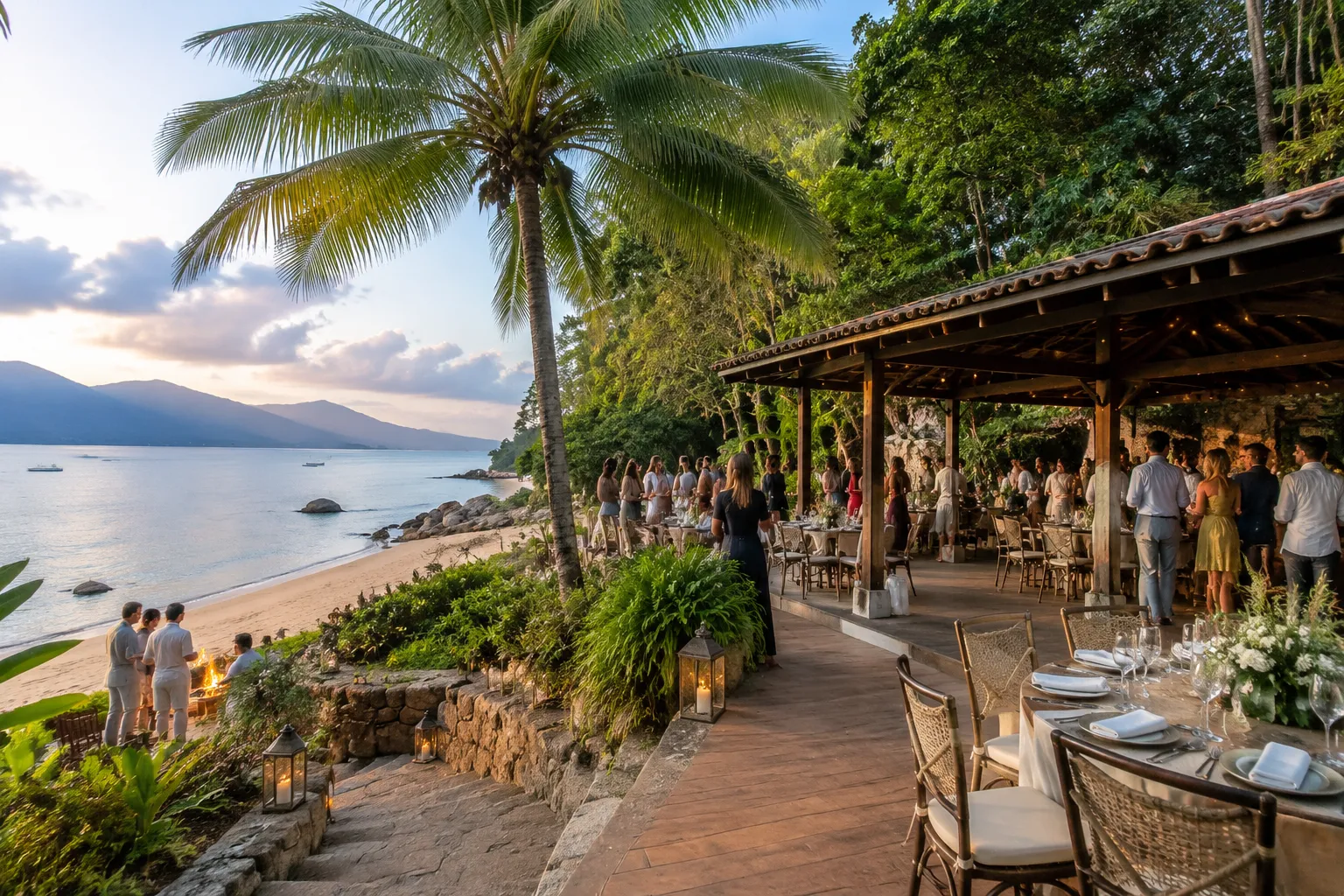
The supplied research does not provide direct evidence about Brazilian wedding customs or family expectations at particular destinations. Those decisions remain specific to the family and venue. A location comparison can still make room for them by asking whether the setting supports the format the couple is planning.
A Practical Comparison Framework
Use the same questions for each potential location. Avoid giving a destination one overall label such as convenient or difficult. Record the conditions that produce that impression.
| Comparison area | What to establish | Who to ask |
|---|---|---|
| Guest origins | Main departure cities, international arrivals, and likely travel patterns | Couple and families |
| Serving airport | Current airport options, flight connections, and arrival logistics | Airline, airport, and current travel provider |
| Final transfer | Road, shuttle, boat, or other onward transport; timing and flexibility | Transfer provider and venue |
| Accommodation | Room supply, distance, grouping, check-in, and guest needs | Hotels, inns, and accommodation providers |
| Infrastructure | Access roads, drop-off points, supplier routes, and venue facilities | Venue and local suppliers |
| Seasonality | Weather-related planning questions and contingency arrangements | Venue and transport provider |
| Destination experience | Scenery, attractions, cultural setting, and optional activities | Couple, families, and venue |
| Wedding operations | Ceremony and reception flow, deliveries, photography, music, and guest movement | Venue and wedding suppliers |
This framework is a planning tool, not a ranking system. It shows which facts are known, which need current verification, and which depend on family preferences.
Common Mix-Ups When Choosing a Location
A destination name is not an itinerary
A region or city name does not tell guests how many connections, transfers, or overnight stays are involved. Build the route from each main guest origin.
A tourism portal is not a venue assessment
Tourism and aviation portals can help with broad destination research. They do not establish the current condition of a particular venue, route, hotel, or transfer service.
A nearby airport is not necessarily a short transfer
The last leg may involve roads, several vehicles, baggage, traffic, weather, or a change of transport mode. Ask for a date-specific plan.
A beautiful setting is not automatically practical for the guest group
Scenery may be central to the couple’s vision, while guests may need accommodation, clear transport, manageable walking distances, and predictable arrival instructions.
A historic or remote example is not current market evidence
Case studies can show how access and destination character may pull in opposite directions. They cannot establish present-day prices, route reliability, venue quality, or suitability.
One family preference does not settle the whole decision
A location may carry cultural or emotional meaning while creating additional work for guests. Discuss the value of the setting and the travel burden before booking.
Questions to Confirm Before Booking
Before choosing between Brazil wedding locations, ask the venue for written answers to the questions that affect the whole group:
- What is the recommended airport for the actual wedding date?
- What current onward transport options serve the venue?
- How long should guests allow between airport arrival and accommodation?
- Which hotels or inns are genuinely near the event?
- Can the venue coordinate guest transfers?
- What facilities support older guests, children, or guests with mobility needs?
- What happens if a flight, road transfer, or outdoor plan is delayed?
- Which suppliers are local, and which require travel from elsewhere?
- What is included in the venue arrangement, and what must the couple organize separately?
- Are ceremony, reception, accommodation, and transport handled by different providers?
- Which details should be confirmed with the local cartório or church office if the wedding includes civil or religious elements?
- What information should guests receive before booking their travel?
Current aviation information can be checked through relevant authority, airport, and airline channels. Broad tourism information can provide regional context. Final answers about transfers, accommodation, venue access, ceremony arrangements, and supplier responsibilities must come from the providers handling the wedding.
The Decision to Carry Forward
A suitable location is not defined by scenery alone. For a particular mix of Brazilian, domestic, and diaspora guests, compare the destination setting with the complete travel chain: serving airport, onward transport, accommodation, infrastructure, seasonal conditions, and venue logistics.
The strongest fit for one guest group may create too much travel work for another. The decision is ready to carry forward when the couple can explain the route, identify who is responsible for each uncertain detail, and tell guests what they need to know before committing to the trip.
Keep the destination appeal, but test it against the real journey. That is the basis for comparing Brazil wedding locations without turning promotional language or incomplete public information into a promise.
Sources
- Destination wedding e suas motivações : uma revisão sistemática da bibliografia
- ANALYSIS OF THE TOURIST TERRITORIES OF THE PIAUÍ COAST USING THE ANALYTICAL HIERARCHY PROCESS
- The before and after of the airport concession at the International Airport of Rio de Janeiro: a survey of tourist demand
- Brazilian Civil Aviation Agency (ANAC)
- Brazil Ministry of Tourism